 TVIJO CENTAVRA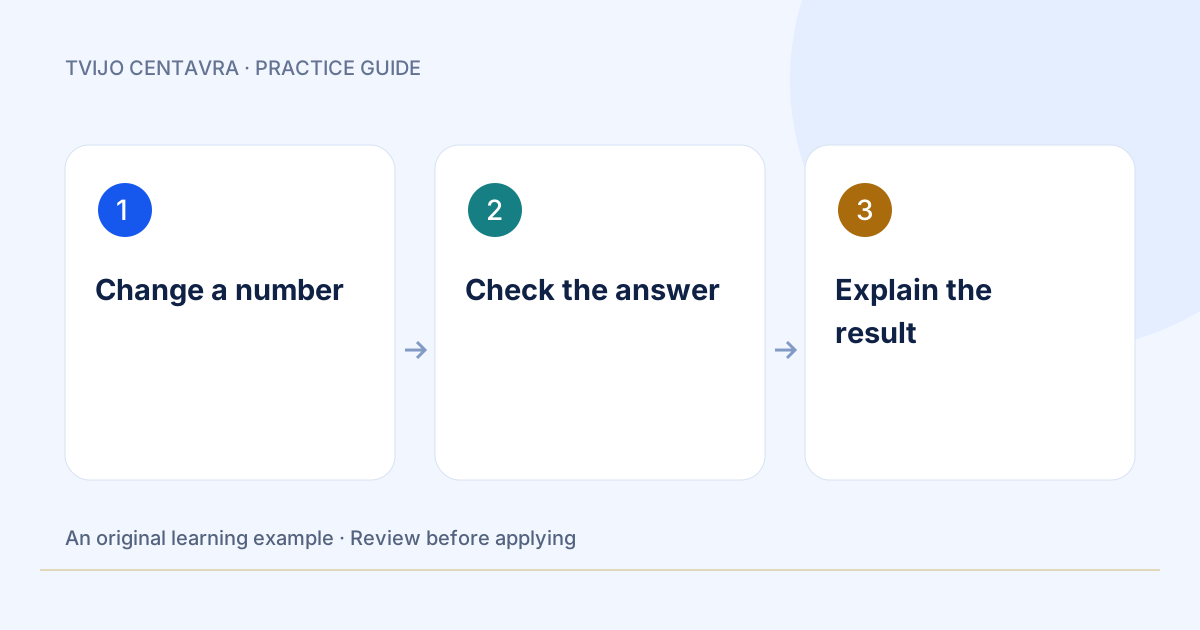
A game grows when trying is interesting and learners understand what they have learned. Start with one mechanic: change a number, see a result and explain it. A star marks a completed action. It should not promise money, require a purchase or hide the purpose of the task.
Three steps to a useful result
1. Choose a learning goal
For example, calculate a rover journey: speed × time. In a supported activity, an adult reads the prompt. An independent learner explains the calculation.
2. Add a safe experiment
Let learners change speed and time and see the formula and movement. An error gives a hint rather than a penalty. A team can compare two solutions.
3. Finish the mission
Ask for an answer and explanation. Keep personal progress on the device. Another mission should be an optional choice.
See the example
Practice scene: a rover travels at 3 m/s for 4 seconds.
Distance: 3 × 4 = 12 metres.
Check: doubling time at the same speed doubles distance.
Reward: one star for the answer and one for the explanation.
Points are not coins and have no monetary value.
Review before using
- The task checks one understandable skill.
- Feedback helps correct an error.
- There are no child leaderboards, pressured daily streaks or paid random rewards.
How to measure value
Check answer accuracy, explanation and transfer to a new example. Time on screen alone does not establish learning value.
Make it your own
Copy your edited brief into the chat before sending. Browsing this guide does not run an AI task. Chat limits are shown before a run.